
2026-08-26 · Mike Hughes
Monsoon Flooding Water Extraction Steps For Buckeye Homes
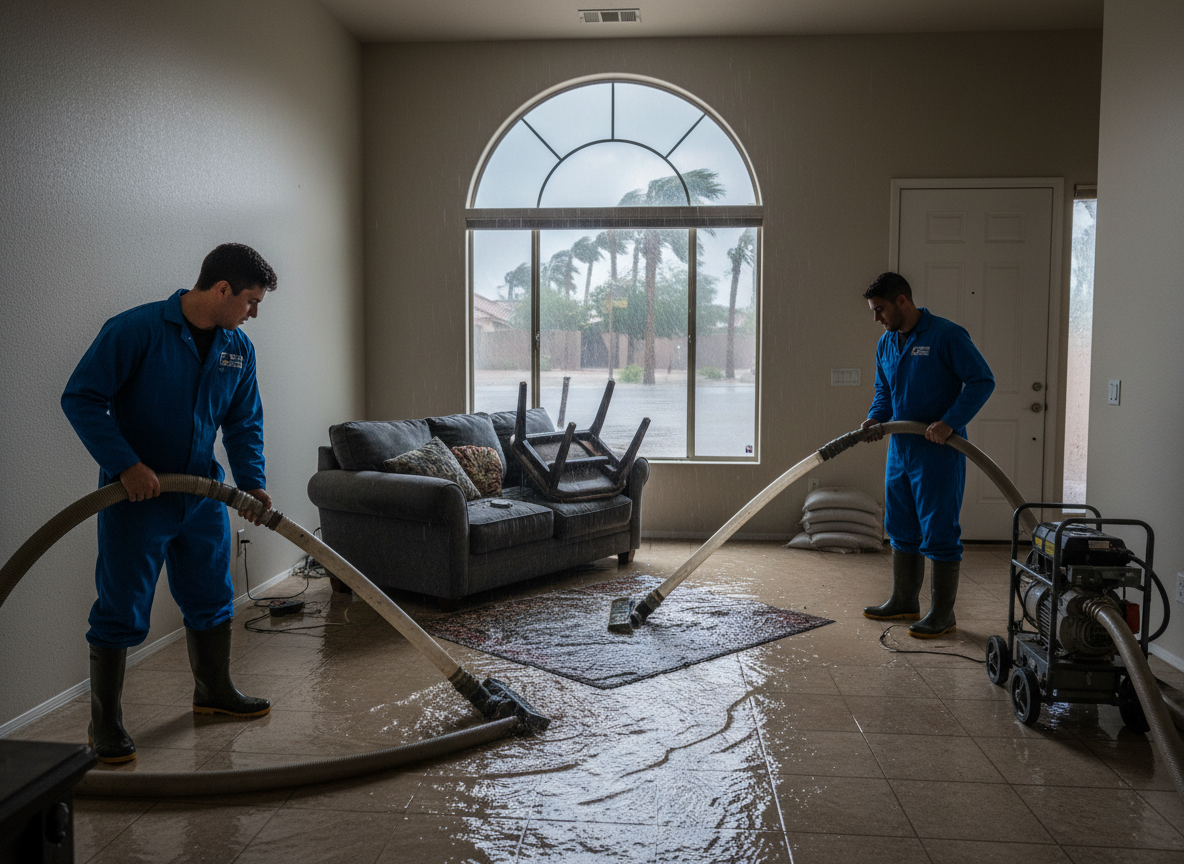
Buckeye homes facing monsoon flooding require water extraction that starts with removing standing water within 24 to 48 hours using submersible pumps rated for 2,000 gallons per hour or higher, followed by moisture mapping with infrared cameras across slab foundations common in Verrado and Sundance.
Preparing Equipment for Monsoon Runoff in Buckeye
Crews arriving at properties near Buckeye Lake or White Tank Mountain Regional Park first stage truck-mounted extractors and portable wands because monsoon downpours create rapid sheet flow across the flat desert terrain. In neighborhoods like Westpark, older slab homes from the 1990s often trap water under cabinets and in HVAC returns, so technicians isolate electrical circuits before placing 50-gallon-per-minute pumps. This setup handles the sudden volume that mild winter rains never produce but summer storms deliver in 30 minutes. Equipment checks include verifying hose lengths reach from garages to street drains without kinking on gravel driveways typical in these subdivisions.
Step-by-Step Extraction Process After Flash Floods
The first action inside the structure is creating a low spot with a wet vac to channel water toward the pump intake rather than letting it spread further into drywall. Next, operators run continuous extraction passes across carpet and pad in living areas, removing 80 to 90 percent of free water before any drying equipment activates. In homes near Verrado Town Center, where lots sit close to drainage channels, crews also pull baseboards early to expose the slab edge and prevent hidden moisture migration toward adjacent Goodyear properties. Final passes use weighted wands on tile floors common in Avondale-border homes to pull water from grout lines that hold liquid for days.
Homeowners can review an inspection checklist before calling for water extraction help to document water lines on walls before crews arrive.
Handling Secondary Flooding in Garages and Slabs
Monsoon water often enters through garage doors in Sundance and Westpark because the desert soil does not absorb heavy rain quickly, sending runoff under roll-up doors. Extraction here uses larger 3-inch hoses connected to 5-horsepower pumps to move 4,000 gallons per hour out to the street before interior work begins. Slab leaks created by this pressure require checking expansion joints with moisture meters, as trapped water can migrate 10 to 15 feet under the concrete toward living spaces. What homeowners should know about extraction from flooded garages covers the specific sequencing that avoids pushing water deeper into the foundation.
Drying and Monitoring After Initial Removal
Once bulk water is gone, air movers and dehumidifiers rated for 70-pint daily removal run for 3 to 5 days while crews log readings every 12 hours on both wood and concrete surfaces. In Maricopa County’s hot desert summers, high outdoor humidity during monsoon season slows evaporation, so closed-system drying prevents pulling more moist air inside. Properties in Verrado often need extra focus on wall cavities because stucco exteriors trap vapor. This phase ties directly into water extraction and removal services that continue until moisture content matches pre-flood levels recorded on unaffected walls.
When monsoon flooding exceeds typical residential volumes, flood damage cleanup crews coordinate with storm teams to protect neighboring homes in the same drainage basin.