
2026-08-26 · Mike Hughes
Drying Techniques After Appliance Leaks In Buckeye Kitchens
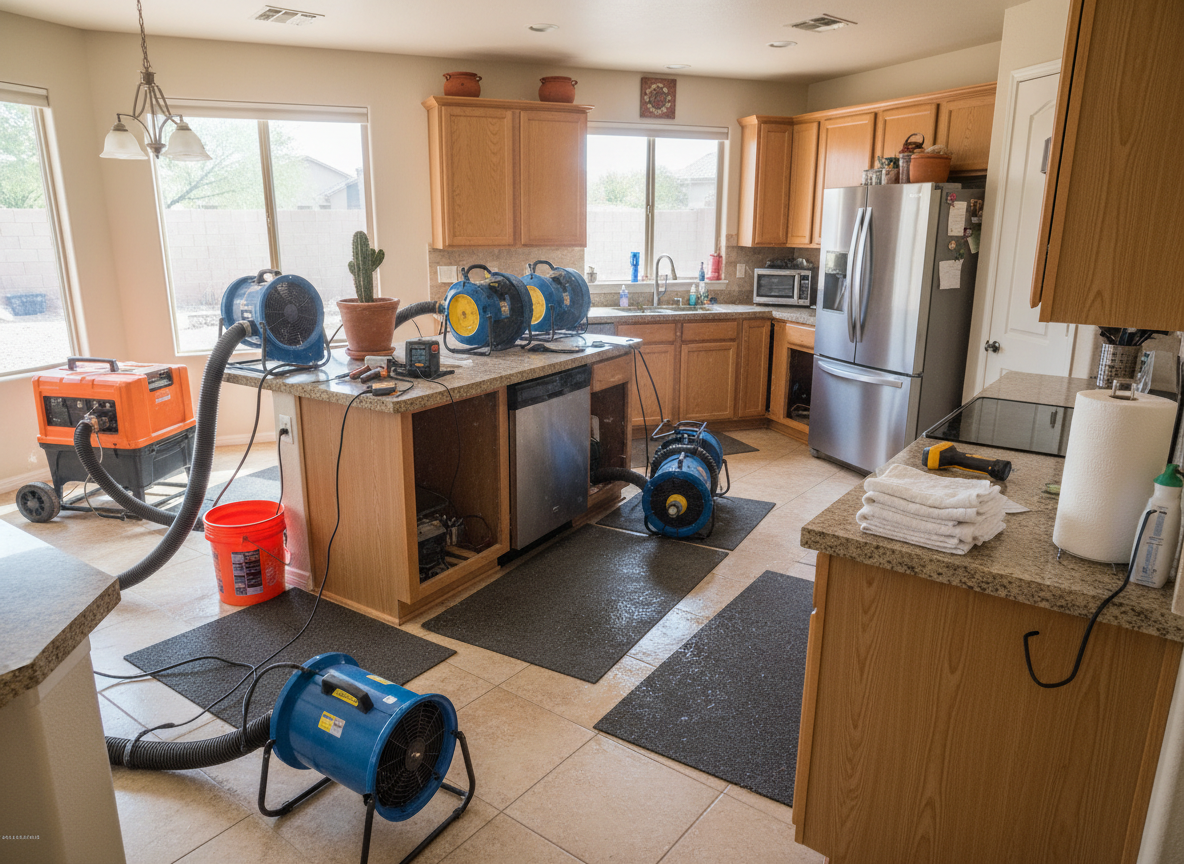
After an appliance leak in a Buckeye kitchen, begin drying by extracting standing water within the first hour, then direct high-velocity air movers across the affected floor and into cabinet bases while running commercial dehumidifiers set to 35-40% relative humidity. This approach accounts for the area's hot desert climate where summer temperatures above 100°F can accelerate surface drying but trap moisture under vinyl or tile in homes built in Westpark and Verrado.
Initial Water Removal and Containment
Stand on the wet floor and mark the perimeter with tape before moving appliances. Pull refrigerators, dishwashers, and washing machines away from walls to expose the full leak path. Use a wet vac rated for 10-15 gallons per minute to pull water from under toe kicks and behind baseboards. In Maricopa County homes near Buckeye Lake, older slab foundations often channel water toward the garage, so extend extraction hoses through doorways rather than risking additional interior spread. Place plastic sheeting over adjacent dry areas to contain dust from demolition if cabinetry must be cut. Continue extraction until no free water registers on a moisture meter set to 15% or below on wood subfloors.
Airflow Patterns for Kitchen Cabinets
Position three to five air movers in a circular pattern around the island or perimeter cabinets so air travels under the toe kick and exits through removed drawer fronts. Angle one unit upward into the sink base to dry the underside of the countertop. Run units 24 hours a day at 3,000-4,500 CFM each, checking amperage draw so circuits in Sundance tract homes do not trip. Rotate equipment every eight hours to reach shadowed areas behind the range and refrigerator. Because Verrado Town Center neighborhoods feature open floor plans, cross-ventilate by cracking a window on the north side during mild winter days when outdoor humidity stays below 20%.
Dehumidification Adjusted for Desert Conditions
Pair air movers with low-grain refrigerant dehumidifiers that maintain 55-65 pints per day capacity. Set the unit in the center of the kitchen and duct exhaust toward an exterior door to avoid reintroducing moist air. In summer, when White Tank Mountain Regional Park temperatures climb past 105°F, increase dehumidifier settings by 5% to offset heat gain through south-facing windows common in Avondale-adjacent subdivisions. Monitor the process with a thermo-hygrometer; target a 10-15% daily drop in moisture content of affected drywall and plywood. Structural Drying & Dehumidification crews typically achieve drywall equilibrium in 3-5 days under these conditions.
Moisture Monitoring and Hidden Areas
Insert pin-type meters into the bottom 2 inches of cabinet sides and the subfloor every 12 hours. Record readings on a simple log; continue drying until all locations read within 2% of unaffected drywall elsewhere in the home. Use an infrared camera to scan for cool spots behind the dishwasher that indicate trapped water against the slab. In homes built before 2005 in Westpark, check the dishwasher drain line junction because original rubber gaskets often fail after 8-12 years and send water along the base plate. Stop equipment only after three consecutive stable readings across 24 hours.
When to Call for Professional Follow-Up
If moisture remains above 18% after 72 hours of continuous drying, schedule Appliance Water Damage Cleanup to remove and replace saturated particleboard or underlayment. Homeowners in Goodyear and Avondale can review expected extraction timelines at Timeline Expectations For Professional Water Extraction In Buckeye before deciding on full restoration. Keep the space ventilated and dehumidified until final readings confirm the kitchen is dry.